Oats can be an excellent food for healthy weight gain when consumed strategically. They provide complex carbohydrates, plant-based protein, fiber, and essential vitamins and minerals. When paired with calorie-dense ingredients such as milk, nut butter, or dried fruits, oats help create the calorie surplus required for weight gain while supporting muscle recovery and digestive health. Students in Bangalore who want to build a career around evidence-based nutrition will find that our comprehensive nutrition courses in Bangalore offer practical, science-backed training in diet planning, client assessment, and applied nutrition science that prepares them for real-world wellness careers.
If you have ever asked yourself, “is oats good for weight gain?”, the answer is yes, especially when consumed in the right combinations and portions. Nutrition experts analyze foods for calorie density, macronutrients, and overall diet context. NFNA emphasizes evidence-based strategies to maximize nutrition benefits, ensuring that oats contribute effectively to a structured weight gain plan.
Understanding Oats: Nutrition Profile and Calorie Content
What Are Oats?
Oats are a whole grain cereal derived from Avena sativa. They are naturally rich in complex carbohydrates, soluble fiber, and plant protein. Oats are also a source of essential vitamins and minerals, including B-vitamins, magnesium, iron, and zinc. These nutrients make oats a balanced food that supports both energy and recovery, which is critical for anyone aiming to gain weight in a healthy manner.
Nutritional Value of Oats
Oats are highly versatile and provide nutrients essential for weight gain and muscle development:
- Calories provide the energy needed to create a calorie surplus
- Complex carbohydrates release energy slowly, fueling workouts and daily activities
- Protein supports muscle repair and growth
- Fiber improves digestion and helps regulate appetite
- Vitamins and minerals aid metabolism, energy production, and overall health
Students in Chennai who are passionate about nutrition science and want to build practical skills in diet planning and client management will find that our structured nutrition courses in Chennai offer evidence-based education designed to prepare them for careers in fitness, wellness, and clinical nutrition.
Why Oats Are Considered a Balanced Fitness Food
Oats are recognized as a fitness-friendly food for several reasons:
- They provide sustained energy, preventing spikes and crashes in blood sugar
- The soluble fiber in oats supports gut health, improving digestion and nutrient absorption
- Oats are easily combined with calorie-dense foods, making it simple to increase daily intake for weight gain
- They contribute to satiety, helping individuals manage their meal timing and portion sizes effectively
Is Oats Good for Weight Gain?
Yes, But It Depends on How You Eat It
The key to weight gain is a calorie surplus, and oats alone may not provide enough calories for significant gain. However, by combining oats with whole milk, nut butter, dried fruits, and protein powders, they can become an effective tool for healthy weight gain. NFNA emphasizes that the quality of calories matters just as much as the quantity. Choosing oats over processed sugary cereals ensures that the weight gained is nutrient-dense rather than fat-heavy. Those who want a broader foundation in food science and its application to nutrition and health will find that our well-structured food science courses offer comprehensive, evidence-based training in food composition, metabolism, and applied nutrition that supports both personal health goals and professional careers in the wellness industry.
Why Oats Can Help Healthy Weight Gain
Oats are more than just a source of carbohydrates; they offer multiple benefits that support weight gain:
- High carbohydrate content provides energy for workouts and daily activity
- Easy to mix with calorie-dense foods like milk, yogurt, peanut butter, and honey
- Contains plant-based protein that aids in muscle recovery and development
- Fiber improves digestion and supports nutrient absorption, ensuring that calories consumed are efficiently utilized
Oats Versus Unhealthy Foods for Weight Gain
While junk foods may lead to rapid weight gain, they often come with unhealthy fats, excess sugar, and low nutritional value. Oats, on the other hand, provide:
- Nutrient-dense calories
- Support for lean muscle development
- Sustained energy for exercise
- Long-term digestive and metabolic benefits
Choosing oats over processed foods ensures that weight gain is healthy and sustainable.
How Oats Help in Healthy Weight Gain
Provides Sustained Energy
Oats are a rich source of complex carbohydrates, which digest slowly and release energy gradually. This helps maintain stable blood sugar levels and provides fuel for workouts, daily activities, and overall metabolism, making it easier to maintain a calorie surplus.
Supports Muscle Growth
Plant-based protein in oats supports muscle repair and development, especially when consumed after exercise. Combining oats with whey protein or yogurt enhances muscle-building potential, making oats a suitable option for gym-goers and athletes. Those who want to combine their nutrition knowledge with professional fitness expertise will find that our comprehensive personal training courses offer structured, practical training in exercise programming, client assessment, and strength-based coaching that prepares them for successful careers across gyms, wellness centres, and personal training settings.
Improves Appetite and Digestion
The soluble fiber in oats, particularly beta-glucan, supports gut health and regular bowel movements. Improved digestion can lead to better nutrient absorption, helping the body make the most of the calories consumed for weight gain.
Easy to Increase Calories
Oats are versatile and can be combined with calorie-dense ingredients:
- Whole milk or cream for extra calories
- Peanut butter or almond butter for healthy fats
- Nuts, seeds, or dried fruits for additional calories and micronutrients
- Honey or natural sweeteners for taste and energy
By adding these ingredients, a simple bowl of oats can easily provide 400–600 calories, contributing effectively to a daily calorie surplus.
Best Ways to Eat Oats for Weight Gain
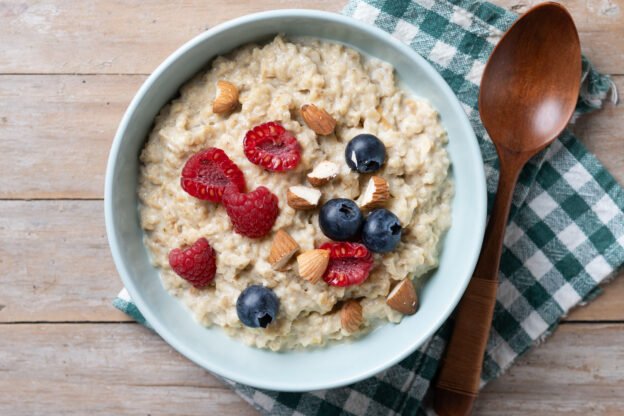
High-Calorie Oatmeal Bowl
Ingredients for a calorie-dense meal:
- 50 grams of oats
- 1 cup of whole milk
- 2 tablespoons of peanut butter
- 1 banana, sliced
- A handful of almonds
Weight Gain Oats Smoothie
A convenient way to increase calories:
- 40 grams of oats
- 1 cup of milk
- 1 scoop of whey protein
- 2 tablespoons of peanut butter
- 2 dates
Overnight Oats for Muscle Gain
Prepared in advance for convenience:
- 50 grams of oats
- ½ cup of yogurt
- 1 tablespoon of chia seeds
- 1 tablespoon of nuts or seeds
- Honey or fruit for flavor
These combinations provide a balance of carbohydrates, protein, and fats necessary for healthy weight gain.
How Much Oats Should You Eat for Weight Gain?
Recommended Portion
The ideal portion for weight gain is 50–80 grams of oats per serving. This amount provides sufficient calories and nutrients, which can be increased by adding milk, nut butter, or dried fruits.
Daily Calorie Strategy
Weight gain is not just about one meal. It requires a total daily calorie surplus. Combining oats with other meals rich in protein and healthy fats ensures that daily caloric needs are met consistently. Tracking portions and total calorie intake is key to achieving sustainable results. Those who want a comprehensive understanding of health, wellness, and the science behind nutrition will find that our well-structured health and nutrition courses offer practical, evidence-based training in applied nutrition, lifestyle medicine, and diet planning that prepares them for careers across fitness, clinical, and corporate wellness settings.
Best Time to Eat Oats for Weight Gain
- Breakfast provides energy to start the day and helps maintain a calorie surplus
- Pre-workout oats fuel exercise with slow-digesting carbohydrates
- Post-workout oats support recovery and muscle repair, especially when combined with protein
Proper timing enhances the effectiveness of oats for weight gain while supporting overall health and workout performance.
Common Mistakes When Eating Oats for Weight Gain
- Eating plain oats without adding calorie-dense foods can limit effectiveness
- Ignoring protein intake reduces the potential for muscle growth
- Focusing only on oats without monitoring total daily calories can hinder weight gain goals
Avoiding these mistakes ensures that oats contribute optimally to a structured weight gain plan.
Who Should Eat Oats for Weight Gain?
- Underweight individuals seeking healthy and sustainable weight gain
- Athletes requiring energy and muscle recovery support
- Beginners at the gym focused on building lean muscle mass
- Anyone trying to gain weight without relying on unhealthy processed foods
Oats are suitable for a wide range of people due to their nutrient density, versatility, and ease of digestion.
Expert Nutrition Tip from NFNA
NFNA emphasizes that successful weight gain with oats involves:
- Balanced macronutrients, combining carbs, proteins, and fats
- Personalized diet planning based on individual calorie needs
- Nutrition education to understand nutrient timing, portion size, and food combinations
Professional guidance ensures that oats are incorporated effectively into a weight gain diet that is sustainable and health-promoting.
Conclusion
So, is oats good for weight gain? The answer is a resounding yes. Oats are a versatile, nutrient-dense, and highly effective food for healthy weight gain. By combining them with high-calorie ingredients, timing meals strategically, and tracking daily calories, oats can support muscle growth, sustained energy, and overall health. Proper portioning and planning ensure that the weight gained is lean and beneficial for long-term fitness goals.
Read Our Latest Blogs
How Many Types Of Nutrition | How To Become A Fitness Trainer | What Is Fitness Certificate | Which Is True Of Fitness And Health | How To Keep Fit And Fine | Protein Rich Food For Hair Growth | Protein Rich Food For Pregnancy | Protein Rich Food Veg In India | Highest Protein Vegan Foods Per 100g | Low Cost High Protein Foods In India
Frequently Asked Questions
Q1. How Can Oats Increase Body Weight?
Oats increase body weight by providing complex carbohydrates for energy and calories. When combined with milk, nut butter, and fruits, they create a calorie surplus, which is the foundation of healthy weight gain.
Q2. Can Oats Help Build Muscle?
Yes. The protein in oats, particularly when combined with whey or yogurt, supports muscle repair. The carbohydrates in oats provide energy to fuel workouts and promote recovery.
Q3. Is Oats Better for Weight Gain or Weight Loss?
It depends on how oats are prepared. Plain oats with low calories may aid weight loss, whereas oats combined with high-calorie ingredients support weight gain.
Q4. Will Eating Oats Every Day Lead to Fat Gain?
Eating oats daily will not automatically cause fat gain. Consuming oats within a structured calorie surplus, combined with exercise, promotes lean weight gain rather than fat accumulation.
Q5. What Are the Calories in One Bowl of Oats?
A serving of 50 grams of raw oats has approximately 194 calories. When combined with milk, nuts, peanut butter, or fruits, the calorie content can easily reach 400–600 calories.
Q6. Why Are Oats Considered a Fitness Food?
Oats are a fitness-friendly food because they provide sustained energy, fiber for digestion, plant protein for muscle recovery, and essential micronutrients for overall health.
Q7. How to Eat Oats for Weight Gain Effectively?
The most effective way to eat oats for weight gain is to add calorie-dense ingredients like milk, yogurt, nut butter, nuts, and fruits while keeping portions consistent and pairing them with protein-rich meals.
Q8. Can Oats Be Part of a Muscle-Building Diet?
Absolutely. Oats provide carbohydrates for energy, protein for repair, and fiber for gut health, making them an ideal addition to pre- and post-workout meals for muscle development.